Victoria, Western Canada's oldest city, was founded in 1843 as a Hudson's Bay Company trading post.
Victoria's roots have been carefully preserved, and can be seen in its lovingly maintained historic and heritage sites.
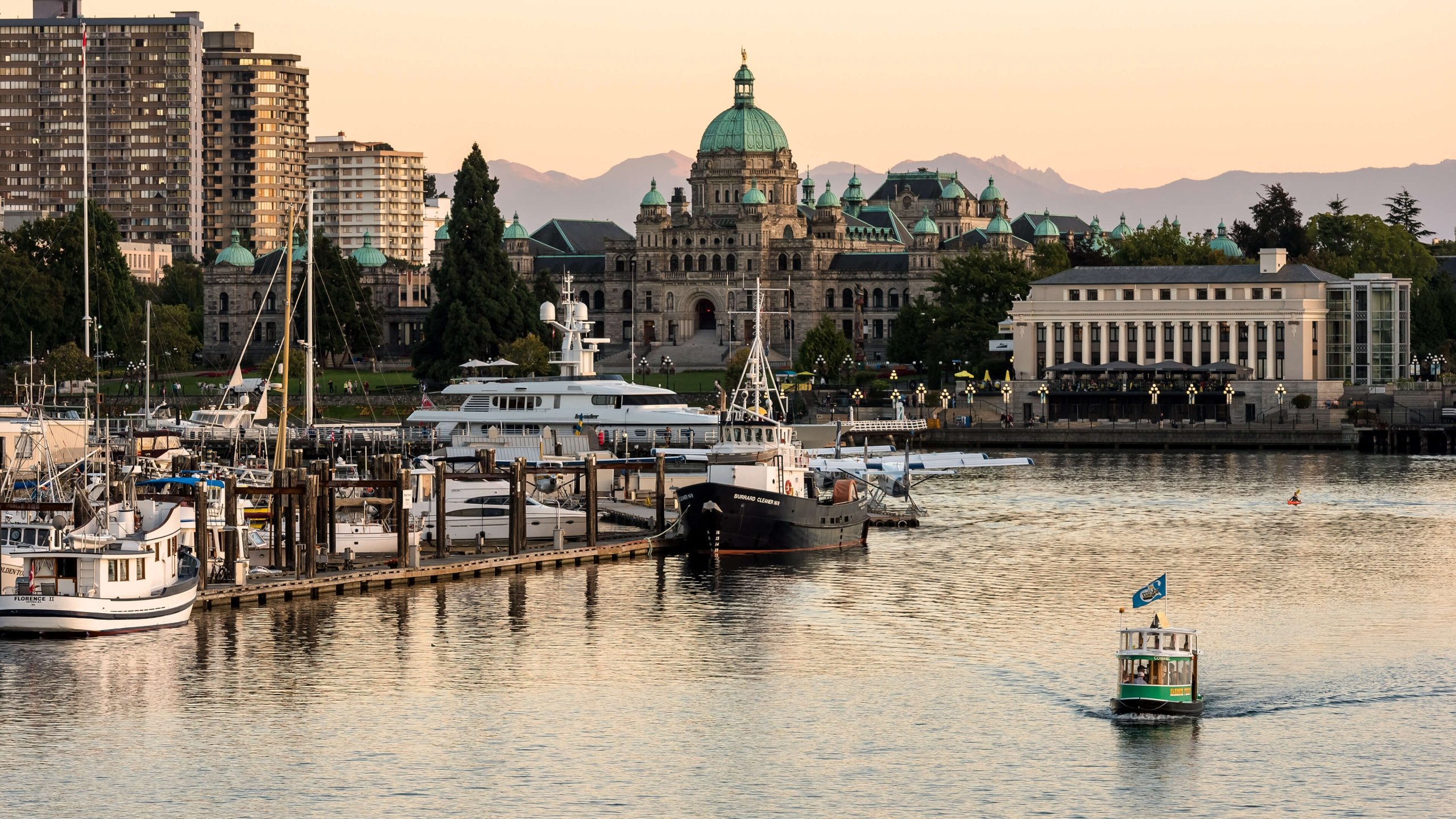
Check out the historic Empress Hotel and Parliament Buildings in the Inner Harbour, and tour Canada’s oldest Chinatown. Don’t miss downtown Victoria’s cathedrals or the hilltop Craigdarroch Castle.
Victoria is Canada’s most British city, laden with reminders of its colonial past. Discover elegant Victorian and Edwardian-era mansions, stately hotels, and impressive architecture around every corner.
From national historic sites to Aboriginal art displays, Victoria satisfies history lovers. It’s easy to get around on foot, by horse-drawn carriage, or on a British-style double-decker bus tour.
Historic Buildings and Structures
Victoria's most famous buildings are the majestic 1908-completed Fairmont Empress Hotel and the 1898-built BC Parliament Buildings, both designed by renowned architect Francis Rattenbury.
Relive the stately elegance of times past with afternoon tea at the Empress, a Victoria tradition. Domed polygon turrets draw on classical influences, while Tudor arches give the lobby an Elizabethan feel.
Stroll the expansive green lawns of the Parliament Buildings, a popular meeting place in Victoria's Inner Harbour. Free guided tours of the Parliament Buildings are available year-round (seven days a week in summer, and Monday to Friday otherwise).
Castles and Historic Houses
Experience lavish, Edwardian-era luxury at Craigdarroch Castle, the former mansion home of local coal baron Robert Dunsmuir. Built in the 1890s, its splendid interior features Scotch granite columns, stained glass, oak staircases, and mahogany fireplaces.
Tour other notable Victoria buildings, including Hatley Castle, a 40-room Edwardian mansion located in scenic Hatley Park and a national historic site; Point Ellice House, an 1861-built family residence that offers afternoon tea (May to September); and Carr House, home to painter Emily Carr, one of Canada's most important artists.
Bastion Square
Bastion Square, site of the old Hudson's Bay Company trading post that spawned present-day Victoria, has charming views of the Inner Harbour and is square is popular for outdoor dining and strolling. Visit the Maritime Museum of British Columbia or peruse the square's unique features, like the ceremonial entry arch at View Street and Government Street.
Canada's Oldest Chinatown
One of Victoria's most popular attractions is its historic Chinatown, once North America’s second-largest. In the late 1800s, Victoria's Chinatown held the largest Chinese community in Canada. Many residents worked in BC's gold fields and built the Canadian Pacific Railway.
Enter this historic district through the Gate of Harmonious Interest, built in 1981 to honour the contribution of Chinese heritage to Victoria. The 11.5m/38ft gate is flanked by hand-carved lions from Suzhou, China, and features traditional inscriptions promoting harmony.
Walk through Fan Tan Alley, Canada's narrowest street. The 73m/240ft alley once burgeoned with opium dens and gamblers playing fan-tan and dominoes. Today, it’s loaded with quaint shops. Nearby, check out vegetable markets and holistic health practitioners, or enjoy traditional dim sum.
Chinatown hosts Chinese New Year celebrations with lanterns and lion dancing (February). And the Victoria Dragon Boat Festival (August) combines culture with sport celebrating Asian history; thousands of paddlers compete, while spectators enjoy cultural entertainment.
Cultural Experiences
To experience Aboriginal culture in the open air, visit Thunderbird Park’s totem poles near the Royal BC Museum, which has extensive collections documenting BC’s natural and human history, along with rotating exhibits. Galleries and shops along Government Street and in Chinatown offer Aboriginal art, plus Chinese and European collectibles.
Historic Cathedrals
Downtown Victoria features two noteworthy cathedrals. Christ Church Cathedral is the Episcopal seat of the Diocese of British Columbia. Built in the Gothic style between 1926 and 1929, the cathedral is faced with rusticated sandstone, granite and moulded "art stone." The pulpit is carved from a 500-year-old oak.
St. Andrew's Cathedral, the mother church of the Catholic Diocese of Victoria, was built in 1892. Its 22-m/72-ft facade features sharply tapered bell towers and materials like red brick, stone and slate. The altar and lectern were designed by Aboriginal artists.
Historic Neighbourhood Tours
Victoria’s heritage register has more than 600 houses. Stroll scenic neighbourhoods like James Bay and South Fairfield, and admire houses dating from the mid-1800s to the present, including Helmcken House, BC’s oldest house. Self-guided walking tours provide a fascinating look at some of Victoria's historic houses. Styles range from classic Colonial Bungalows to Gothic, Queen Anne, Georgian, Tudor, Edwardian and Craftsman-style residences. See the Victoria Visitor Centre for walking routes.
Victoria's Maritime History
Victoria's rich maritime heritage is celebrated at Fort Rodd Hill and Fisgard Lighthouse, an 1890s coast artillery fort designed to protect Victoria and the nearby Esquimalt Naval Base from seafaring invaders. Wander through underground passages, guardhouses and barracks, or stare down the barrel of an ancient gun battery.
Fisgard Lighthouse, built in 1860, was the first permanent lighthouse on Canada's West Coast. Now part of the Fort Rodd Hill and Fisgard Lighthouse National Historic Site, the lightkeeper’s home is now a converted museum. The grounds surrounding Fort Rodd Hill offer excellent sightseeing, picnicking, wildlife viewing and bird watching opportunities.
Read Less