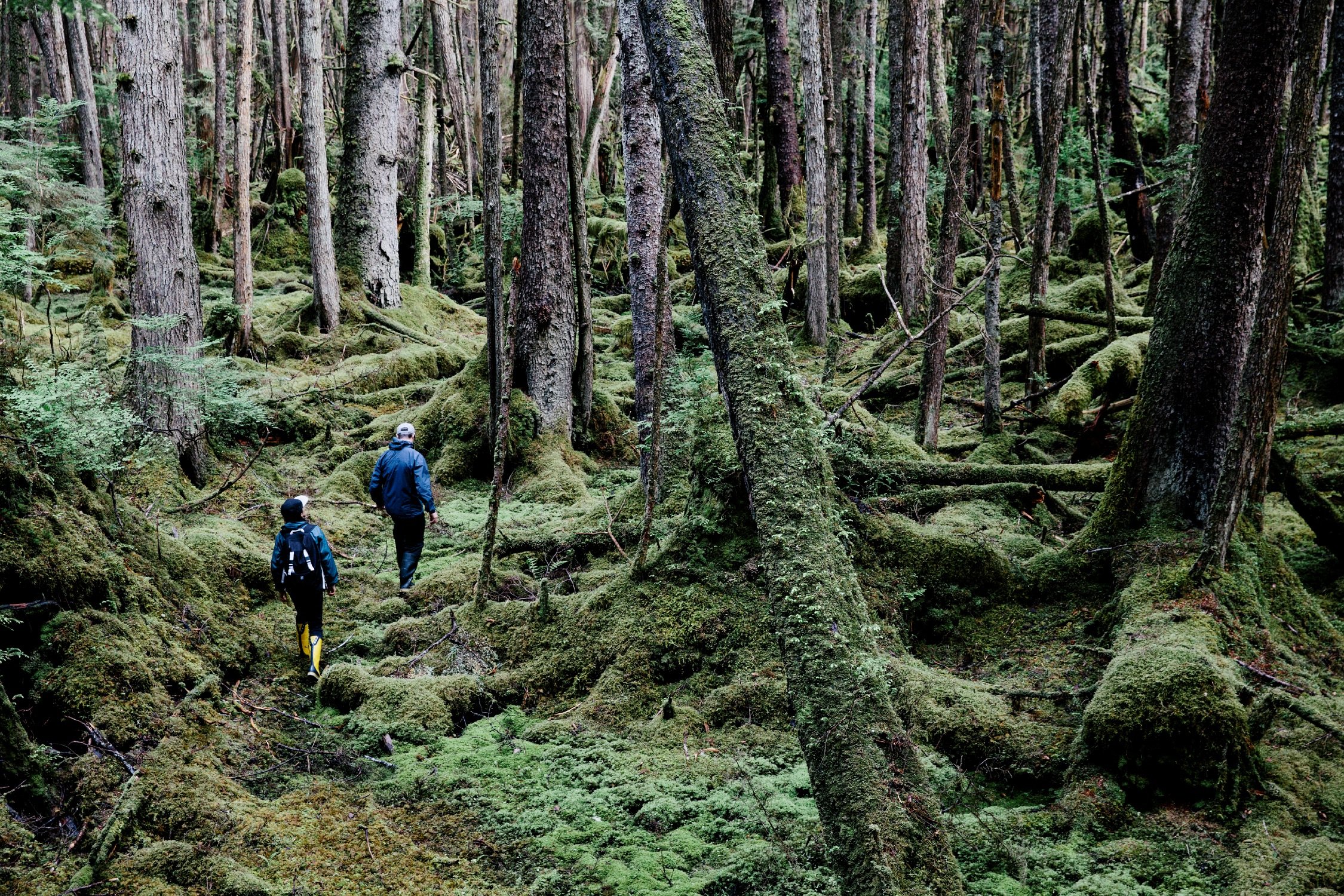
The Cariboo Chilcotin Coast offers hikers a wide variety of hiking trails and terrain, from gentle river valley trails to multi-day pack horse assisted hiking treks.
The diverse, uncrowded landscape in the region includes grasslands and ranchlands, mountains, interesting rock formations known as hoodoos, lakes and forests.
Hikers and walkers looking for an easy stroll will find it in the scenic Williams Lake River Valley Trail, accessible from downtown Williams Lake. For a more strenuous and remote hike, Ts'yl-os Provincial Park offers a remote 4- to 6-day loop trek. And in the Clinton area the Marble Range is notable for its series of folded limestone ridges and castellated peaks (Mt Bowman, Mt Kerr and Wild Horse Ridge).
Learn more about Easy, Intermediate and Advanced Hiking Trails and Highlights of CCC:
Guided/Historical Hiking Tours
A guided hiking tour is a great way to experience the remote landscapes of the Cariboo Chilcotin Coast. Many of the trails, wilderness camps, lakes and forests in the region are best accessed via floatplane, which is typically arranged as part of a tour.
Trek along the challenging and historical Alexander Mackenzie-Nuxalk Carrier Grease Trail, and follow in the footsteps of explorer Alexander Mackenzie and the Nuxalk Carrier First Nations. Or let a horse carry your backpack through the South Chilcotin Mountains or Tweedsmuir Provincial Park, as part of a pack-horse assisted hiking tour.
Heli-hiking opportunities are also available for both novice and experienced hikers wanting to get into more isolated alpine environments.
Getting to the Hiking Trails
While buses service a number of communities along Highway 97, having a vehicle will allow you to cover the Cariboo Chilcotin Coast's wide open spaces with maximum flexibility. Many of the region's "must-do" hiking trails are situated in provincial parks. Some trails are road-accessible, but others are best reached by floatplane. Local bookstores or community Visitor Centres often offer an array of books or trail maps for the self-guided traveler.
Practical Points and Hiking Safety
The Cariboo Chilcotin Coast has rugged and remote wilderness areas. Remember the following:
- Proper planning, preparation, clothing and footwear appropriate to the conditions, and an adequate water and food supply are essential.
- Weather can change quickly, especially in the mountains.
- Dress in layers. Bring long and short-sleeved t-shirts, micro-fleece sweaters, shorts, trousers, light down vests, wind jackets and rain gear.
- Keep a layer between you and the pesky mosquitoes which can be a nuisance anytime except mid-winter.
- Bring wet-weather gear, no matter what season.
- Wear hiking boots with good ankle and arch support and be prepared to get muddy.
- Please leave the area you visit undisturbed and be sure to carry out your garbage.
- Obey posted signs, keep to designated trails and be aware of restrictions for pets.
- Cougars, bears and other wildlife inhabit the region. Do not get too close to or attempt to feed wild animals.
- Some areas and trails in the area may pass near or through private property. Be considerate of these owners and respectful of these boundaries.
Hiking Trails by Rating:
Easy
Barkerville and Surroundings
Williams Lake River Valley Trail
Intermediate
Spruce Lake
Tweedsmuir Provincial Park
Advanced
Alexander Mackenzie/Nuxalk-Carrier Grease Trail
Barkerville and Surroundings
Spruce Lake
Tweedsmuir Provincial Park
Alexander Mackenzie/Nuxalk-Carrier Grease Trail
In 1793, Alexander Mackenzie was the first European to complete an overland journey across North America north of Mexico. The Nuxalk and Carrier peoples, long-time inhabitants of the present-day Cariboo Chilcotin Coast, helped to guide him through the region. Today, you can explore this legendary trail, originally called the 'Grease Trail' by land and water.
Day trips along the historic 420km route are accessible by gravel road from both Quesnel and Prince George, near Highway 97. Or, at Burnt Bridge Creek near Bella Coola, take the scenic two-hour loop trail at the western border of Tweedsmuir Provincial Park.
Experienced backpackers can plan ahead and hike the 350km/217mileoutback portion of the trail in three weeks. A food supply drop at the halfway mark is essential. Shorter hiking segments are also possible.
To reach Sir Alexander Mackenzie Provincial Park where the explorer inscribed his famous words – "Alex Mackenzie from Canada by land 22nd July 1793" – you must travel by boat, just as Mackenzie did.
The best time to travel the route is August to September. Be aware that portions of this trail are on or near private property. The main trailhead begins next to a parking lot on Blackwater Road, off Highway 97 near Quesnel and Prince George.
Barkerville and Surrounding Area
Follow the Gold Rush Trail to historic Wells and Barkerville. Along the way, you'll walk the old mining and forestry trails of prospectors and miners, traversing through some of the most colourful history and diverse hiking terrain in BC, with trails ranging from easy to difficult.
Yellowhawk Trail is a 10.5km/6.5mile path through the alpine and sub-alpine meadows of the Cariboo Mountains. The 4-6 hour roundtrip is rated intermediate to advanced.
The extensive Mount Agnes Trail Network begins behind Barkerville, following the route of the original Cariboo Wagon Trail to Summit Rock. Ramble through alpine meadows and enjoy splendid mountain views. In summer, you can see a re-enactment at the Richfield Courthouse of the courtroom once ruled by Judge Begbie, the region's famous "Hanging Judge."
The best time for hiking is late June to early October. Wells and Barkerville are located on Highway 26, one hour east of Quesnel.
Spruce Lake
The multi-use Spruce Lake Trails are located in Spruce Lake Protected Area (South Chilcotin Park), a wilderness park that protects a number of intact watersheds and headwaters. Highlights of the terrain include mid-elevation grasslands, sub-alpine and alpine meadows, alpine lakes and mountain peaks. Watch for bears and store and cook food away from campsites.
- Gun Creek Trail (moderate) gains 650m/2,133ft in elevation over 22.5km/14mi and takes about 3 days to complete, roundtrip.
- High Trail (difficult) takes about 2 days to complete, roundtrip.
- Warner Pass Trail (difficult) gains 750m/2,461ft in elevation over 21.5km/13mi and takes about 4 days.
- Tyaughton Creek Trail (moderate), which takes about 4 days to complete, roundtrip, starts off the Mud Creek Forest Service Road, on the southeast side of the park.
Spruce Lake is located north of Pemberton and northwest of Lillooet, off Hurley River Road and Highway 40 respectively. Access is via rough, unpaved roads through the community of Gold Bridge. Float plane service, maps and tour guides are available at Tyax Wilderness Resort & Spa. The best time for hiking is June through September.
Tweedsmuir Provincial Park
The 981,000-ha/2.4 million acre Tweedsmuir Provincial Park enchants visitors with its volcanic Rainbow Mountains, high-elevation pine forests, meadows, glacial-capped peaks, waterfalls and wildlife sightings.
Tweedsmuir has two main hiking areas: Rainbow Range Trail and the Hunlen Falls/Turner Lake Chain. Hike the Rainbow Range, a 7km/4.3mi route that passes stands of pine and fir before reaching the open alpine and a small lake. The moderate hike is 4-6 hours roundtrip and hikers should start at Highway 20 near the park's east entrance and Heckman Pass.
Or hike in to Turner Lake and continue on to the area around Ptarmigan Lake for many multi-day trail options. Alternately, fly in for a half-day hike to see Hunlen Falls. The Hunlen Falls/Turner Lakes Trail is a strenuous 58km return hike along the Atnarko River and passes through prime grizzly bear habitat so use caution.
Another challenge to tackle isthe north half of the park, in the remote Quanchus Range. Hikers should be completely self-sufficient or enlist the services of a professional guide. Access into the area is by float plane.
The best time for hiking is mid-June to mid-September. Tweedsmuir Provincial Park is 4–5 hours west of Williams Lake on Highway 20.
Williams Lake River Valley Trail
The Williams Lake River Valley Trail spans some 12km/7.5mi, winding from downtown Williams Lake to the Fraser River. The river drops over 500 feet as it meanders past meadows, hoodoos, sagebrush, juniper, and grassy benches. Your easy walk begins in a park-like expanse scattered with trees, then continues across open grassland and past magnificent cliffs before reaching the river.
Hike the entire trail, about five hours roundtrip, or stroll along a small section. Pit toilets, picnic tables, benches and interpretive signs are situated en route.
The trail is snow-covered through winter and early spring. Start at the main trailhead in downtown Williams Lake.
Read Less