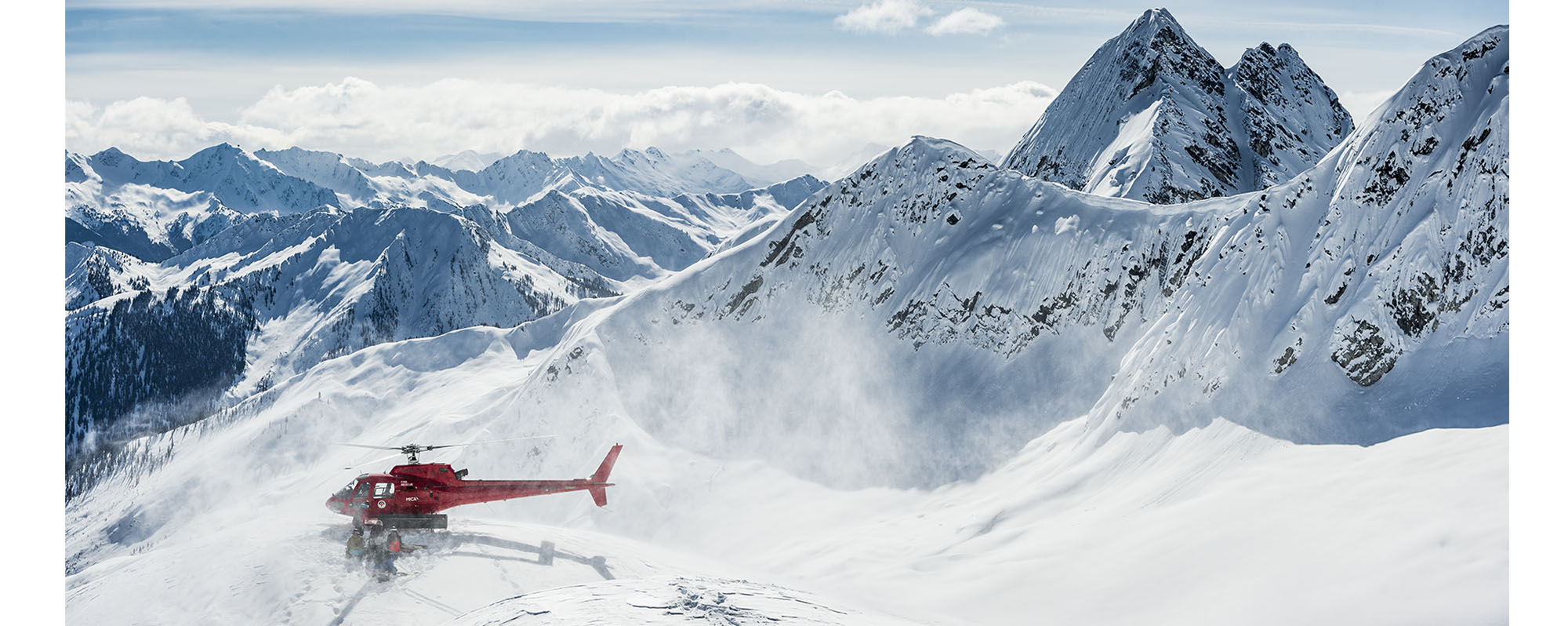
British Columbia reigns supreme as one of the world's foremost heli-skiing and cat-skiing destinations. Heli-skiing was pioneered in British Columbia more than 40 years ago, while cat-skiing was born more than 25 years ago in the Kootenay Rockies region.
Heli-skiing means accessing untouched, remote alpine terrain via helicopter. Adventurous skiers and boarders know that BC’s huge, consistent snowfalls, cool temperatures and ten massive mountain ranges translates to untouched powder, epic descents and diverse, wild terrain.
Hop in a snowcat (a treaded, truck-like vehicle), and access lower altitude – but still exhilarating – runs. Cat-skiing is generally less expensive than heli-skiing and is often utilized in inclement weather.
There are more than 20 heli-skiing and cat-skiing operators scattered throughout the province. All access deep powder and vast expanses of untracked terrain but have an array of heli-ski and cat-ski packages, amenities, accommodations, and services to suit all budgets and tastes.
Heli-Skiing and Cat-Skiing in British Columbia's regions:
Kootenay Rockies: The birthplace of heli-skiing and cat-skiing and the region with the highest number of operators in BC.
Northern British Columbia: One of the largest heli-skiing and cat-skiing areas on the planet, with skiable terrain as far north as the 60th parallel.
Cariboo Chilcotin Coast: Deep snow packs, sprawling ice fields, steep descents and some of the highest peaks in BC.
Vancouver, Coast & Mountains: Remote cat-skiing and heli-skiing in the Pemberton Valley with all the amenities of nearby Whistler.
Thompson Okanagan: Includes a self-contained “heli-village” resort, expansive provincial parks, and the highest peak in the Rocky Mountains.
Whistler: Terrain more than 100 times the size of Whistler’s ski resort, plus a legendary après-ski scene.
Snow and Terrain
BC is known for its challenging ski terrain, but there are some gentler slopes as well. Ski alpine glaciers, open bowls, tree-lined glades, chutes, steeps and couloirs.
Annual snowfall in BC ranges from 10.5m/35ft on the west coast to a substantial 15m/50ft in the eastern Kootenay Rockies. Depending on the time of year, climate, and mountains, snow conditions can vary from knee-deep champagne powder to effortless, velvety corn snow. Ski season generally begins in mid-November and can last until late spring.
Heli-Ski and Cat-Ski Tours
There are endless options for heli-skiing and cat-skiing tours. Join a multi-day excursion or head to a ski resort for a single-day trip. Packages can range from small groups to private, customized tours and can include activities like lift-skiing, fishing, or soaking in a natural hot spring.
Accommodations can be remote destination lodges or convenient in-town hotels. At day's end, enjoy gourmet food, après-ski nightlife, and amenities such as hot tubs, fireplaces, fitness centres – even an indoor climbing wall.
Equipment and Ability
Heli-skiing and cat-skiing is typically for intermediate to advanced skiers with good physical fitness. Each operator has different guidelines, but clients should be able to comfortably ski blue and black diamond runs at ski resorts.
Powder skis/snowboards and poles are supplied, although a few operators rent equipment at an additional price. Guests must bring clothing and boots (tip: pack boots as carry-on luggage if flying).
Practical Points
- All of BC’s heli-skiing and cat-skiing operators follow strict safety guidelines, and certified guides accompany skiers to help ensure a safe experience.
- Departures may be delayed due to inclement weather.
Show Less