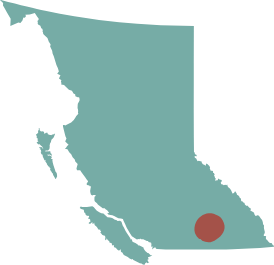
Osoyoos is located in the southern Okanagan Valley on the shores of Osoyoos Lake.
The name Osoyoos comes from a First Nations word "Souyoos," which roughly translates as a narrow waterway or where the land almost meets. This is likely in reference to the narrow strip of land that nearly divides the lake in two. Osoyoos is noted for its clear skies and lack of air and light pollution.
Mount Kobau, northwest of Osoyoos, was selected as the site for a national observatory in the 1960s. The observatory was not built, but amateur astronomers still use the easy-access summit for stargazing. Three small private observatories are located on the flanks of Anarchist Mountain east of town.
Osoyoos stands in the midst of one of Canada's most endangered ecosystems. In this farthest northern outpost of the Great Basin Desert, most of the native antelope brush and shrub-steppe ecosystem has been destroyed by human activity over the last century-and-a-half.
Orchards & Vineyards
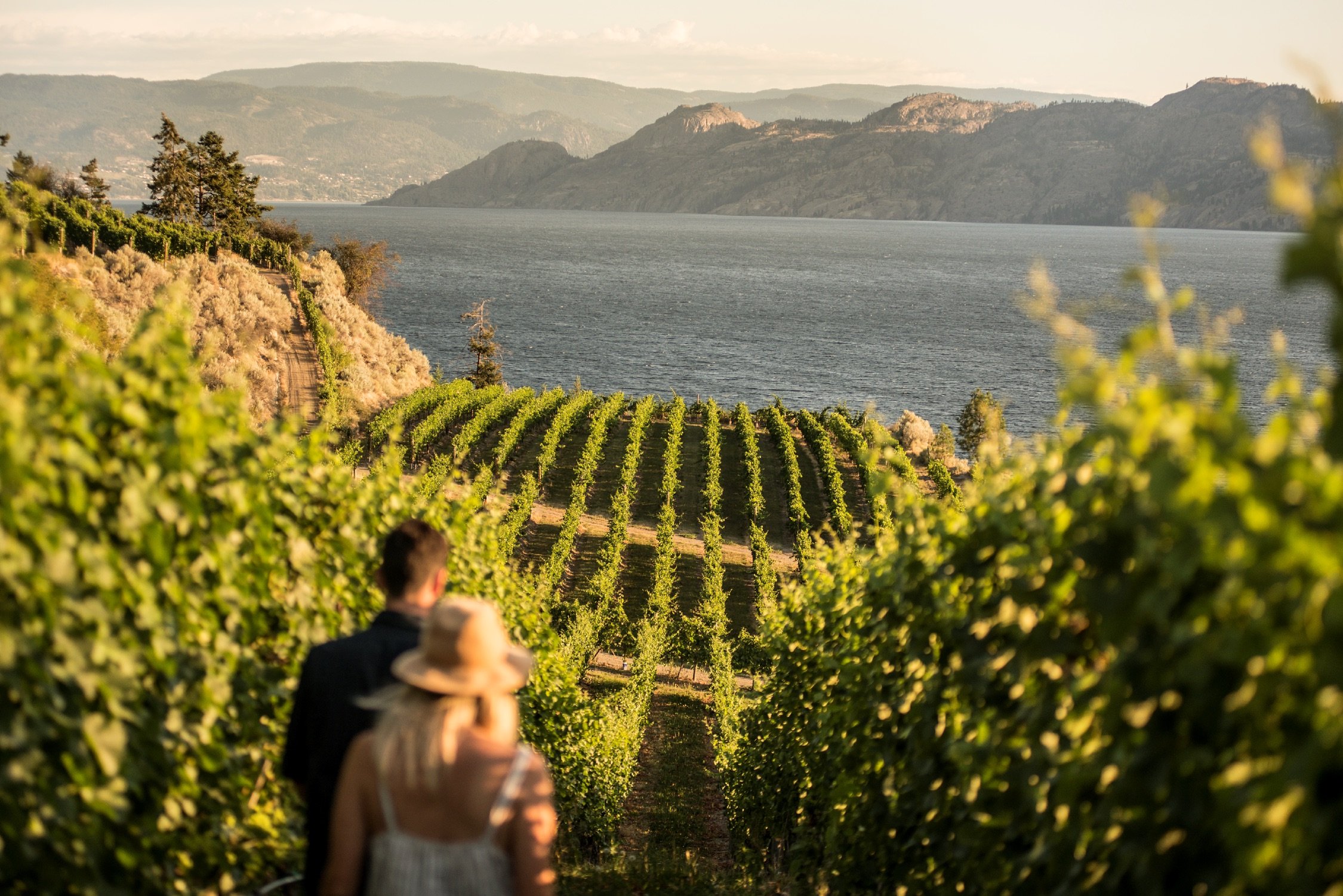
The area is blessed with rich soil deposited by glaciers, but agriculture would be impossible without irrigation from the Okanagan River and Osoyoos Lake. With this water, the land blossoms and Osoyoos is surrounded by orchards in the valley bottom and vineyards that climb the dry hillsides and spread across the benches beyond.
Topography & Terrain
A distinct line is drawn across the landscape with lush green orchards and vineyards in the irrigated zone on one side and golden grasslands and the desert-like antelope brush grasslands on the other. Ponderosa pine and Douglas fir dot the hillsides in increasingly dense stands as the land rises to the heights of Anarchist Mountain and the Okanagan Highland to the east and the Okanagan Range of the Cascade Mountains to the west. The westerly mountains cause a rain shadow effect that produces the region's semi-arid climate.
Waterways
The town of Osoyoos hugs the shoreline of Osoyoos Lake, which extends across the Canada-US border into Washington State. The 19km/12mi long body of water is said to be the warmest freshwater lake in Canada with average July/August temperatures of 24°C/75°F.
North of town, the once meandering Okanagan River has been constrained within the banks of a man-made channel to control flooding. Segments of the former oxbows remain and local citizens are actively working to rehabilitate sections of the surrounding wetlands, excellent areas for bird watching. A hiking and biking trail follows the river channel north through the town of Oliver.
Mount Baldy
Mount Baldy, located 57km/35mi east of Osoyoos, is one of the tallest peaks in the Okanagan Highland at 2,303m/7,557ft. On average, 650cm/21ft of dry champagne powder snow falls annually, making for great skiing conditions from early December through March.
Osoyoos Climate
Osoyoos experiences four distinct seasons. Summers are long and hot with average daily highs in July of 29.2°C/84.6°F and many days in the upper 30°C/90°F. Humidity is very low. Winters are short and relatively mild with average January highs of -2.1°C/28°F and little snow. Precipitation averages just 317.6mm/12.5in annually.
Variations in altitude make the seasons elastic. It's perfectly feasible to enjoy a morning of spring skiing at Mount Baldy, then play an afternoon round of golf in Osoyoos.
Winter tires are strongly recommended when heading to the high country from early autumn through late spring. Road conditions at higher elevations can be treacherous even when excellent in the valley. Four-wheel or all-wheel-drive vehicles are best suited for rugged backcountry travel.
Read Less