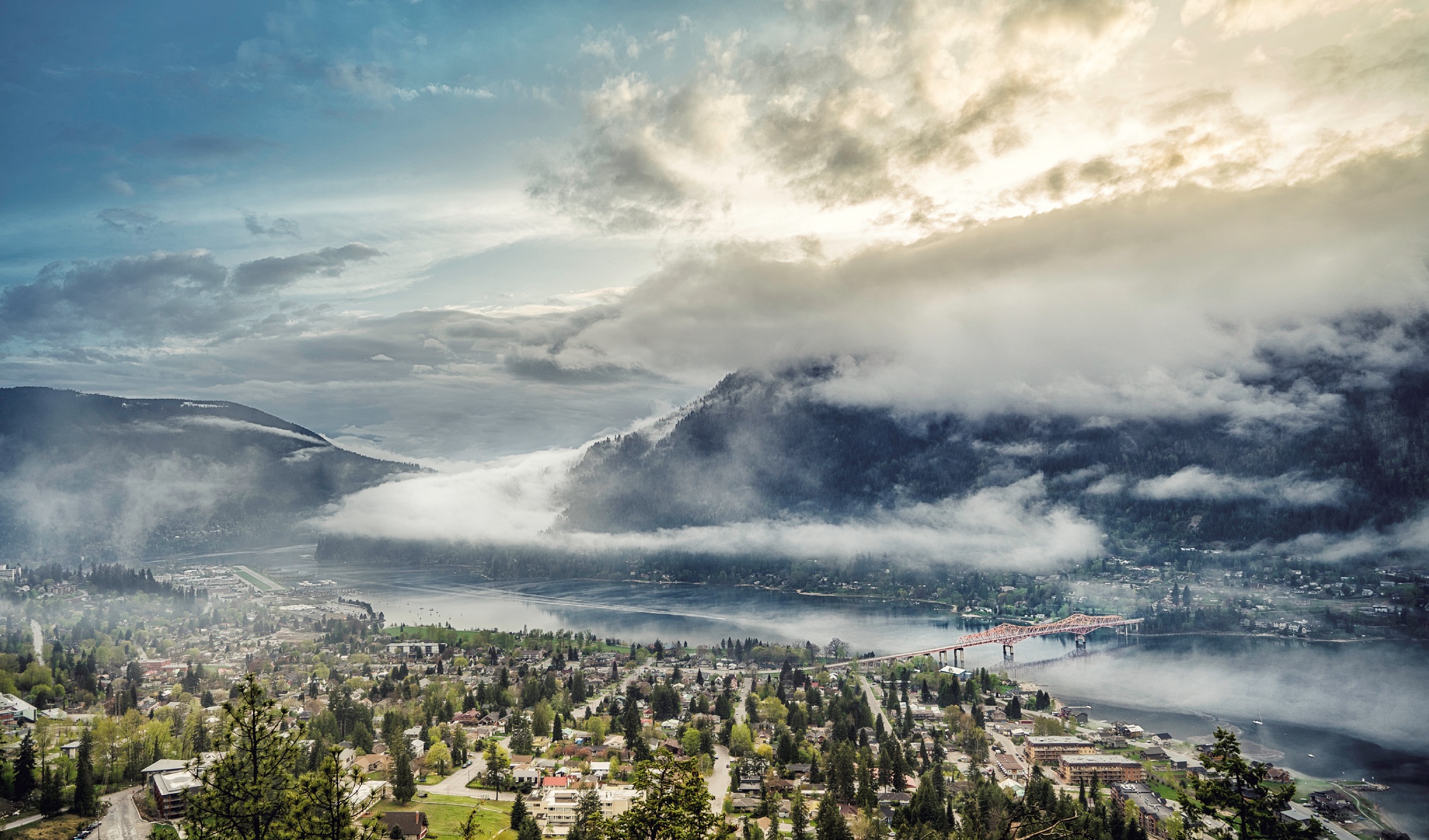
Epic mountain ranges, sparkling lakes, old-growth forests and wildflower meadows – there are hundreds of parks in BC to explore. In 2011, BC Parks is celebrating its 100th anniversary.
The Kootenay Rockies region encompasses 4 mountain ranges – the Rockies, Purcells, Selkirks, and Monashees. Within these ranges, 7 national and provincial parks are UNESCO designated, "Canadian Rocky Mountain Parks World Heritage Sites."
National and provincial parks feature amazing mountains, lakes, ancient fossil fields, old-growth rainforests, and alpine meadows renowned for their colourful displays of late-summer wildflowers. Whether it is a drive-in family camp, or a hike-in wilderness experience, the Kootenay Rockies region offers 4 national, and 75 provincial parks to choose from.
In 2009, Kootenay and Yoho national parks were jointly ranked second in the world (first in North America) by National Geographic Traveler in their annual survey on destination stewardship.
Learn More About National and Provincial Parks in the Kootenay Rockies
Kootenay National Park
Mount Revelstoke National Park
Glacier National Park
Yoho National Park
Valhalla Provincial Park
Kokanee Glacier Provincial Park
McDonald Creek Provincial Park
Whiteswan Lake Provincial Park
Kootenay National Park
"From cactus to glacier" accurately captures the diverse landscape, elevation, ecology, and climate of Kootenay National Park. With a land area of 140,600ha/347,430ac, the park extends from the dry southwest facing slopes of the Rocky Mountain Trench to the lofty peaks of the Continental Divide in the north, forming a contiguous border with Banff National Park, Yoho National Park, and Jasper National Park.
Kootenay National Park offers an array of natural features: A self-guided nature trail leads across Vermillion River to Paint Pots, a cold mineral springs. Paint Pots receives its name from high iron content in the water seeping into the surrounding clay, colouring it a vivid orange. Radium Hot Springs, natural mineral hot spring pools, are located at the southern end of the park. Wildlife abounds in Kootenay National Park, from elk and bighorn sheep to owls and snowshoe hares.
Kootenay National Park offers various outdoor seasonal activities, including hiking, backpacking, swimming, rafting, cross-country skiing and snowshoeing.
Visting Kootenay National Park
- Kootenay National Park is just outside the community of Radium Hot Springs, and is 33km/20mi west of Banff, Alberta.
- 400 vehicle-access campsites as well as backcountry sites are available. Reservations are recommended.
Mount Revelstoke National Park
Mount Revelstoke National Park (260sq km/100sq mi) is marked by its varied ecology and geography, from dense rainforest, and expansive subalpine wildflower meadows to ice-capped peaks. The park's old growth stands of cedar and hemlock create a warm moist environment for unique plant and animal life. Mount Revelstoke offers a spectacular view of both the Monashee and Selkirk Mountains.
In the summer, visitors can drive up the 26km/16mi Meadows in the Sky Parkway to experience the sub-alpine meadows, ablaze by mid-August with colourful wildflowers. Mount Revelstoke National Park has two exceptional interpretive trails: Giant Cedars Boardwalk (through a 400-year-old cedar stand) and Skunk Cabbage Boardwalk (through wetland habitat). In winter, hiking trails are perfect for snowshoeing and the Parkway can be used for cross-country skiing.
Visiting Mount Revelstoke National Park
- Mount Revelstoke National Park is located on Hwy 1, just minutes from the town of Revelstoke.
- Backcountry campsites are available. However, there are no vehicle-access campgrounds. Nearby Glacier National Park does feature 3 vehicle-access campgrounds.
Glacier National Park
Glacier National Park covers an area of 1349sq km/520sq mi of which 12% is permanent ice and snow. The steep rugged mountains, warm, moist climate and wide variety of plant and animal life are typical of this natural region. The park's steep slopes and average snowfall of 23m/75ft make it one of the world's most active avalanche zones, which necessitates the world's largest mobile avalanche control programs.
Glacier National Park's extensive network of trails provides hikers access to alpine tundra, subalpine meadows, and a lush rainforest of cedar and hemlock. The park also offers great opportunity for backcountry skiing, backpacking and mountaineering, as well as wilderness and wildlife viewing. The Rogers Pass Discovery Centre offers year-round interpretation and information on the park.
Visiting Glacier National Park
- Glacier National Park is located on Hwy 1, 80km/50mi west of Golden and 72km/45mi east of Revelstoke.
- In the summer season, three campgrounds servicing a total of 95 sites are available. Backcountry camping, winter camping and hut lodgings are also available within the park. Park fees are in effect.
Yoho National Park
"Yoho" is the Cree word for "awe," an apt description for a park that features 28 peaks at more than 3,000m/9,843ft. In addition to incredible mountain peaks, Yoho National Park is also home to: Takakkaw Falls, one of Canada's highest waterfalls, with a free fall of 254m/833ft; hoodoos, a geological formation of glacial debris exposed by erosion; Spiral Tunnels that were cut through the park's mountains during railroad development; and the Natural Bridge carved out by the force of Kicking Horse River.
High above Yoho's Emerald Lake is the 505-million-year-old Burgess Shale fossil deposit. Burgess Shale is one of the most significant deposits of Cambrian-age, soft body marine organisms in the world.
In summer, Yoho National Park offers a variety of great outdoor activities, including hiking, backpacking, camping, mountain biking, rafting, and fishing. In winter, cross-country skiing, snowshoeing, and ice climbing are available. Wilderness and wildlife viewing is amazing year-round.
Visiting Yoho National Park
- Yoho National Park is 40 minutes east of Golden, and borders Banff and Kootenay National Parks.
- Yoho offers 5 campgrounds, with 337 campsites in total accessible by walk-in or vehicle. Winter camping is also permitted in specified locations (no reservations).
Valhalla Provincial Park
Valhalla Provincial Park is 49,893ha/123,288ac of dramatically diverse terrain, encompassing 30km/19mi of the Slocan Lake and most of the Valhalla range in the Selkirk Mountains. Valhalla is a haven for self-sufficient backcountry adventurers, particularly climbers attracted to its massive granite peaks and sheer rock faces. At the park's northwest end, New Denver Glacier stands at an elevation of 2,758m/9,102ft, while the park's central area is defined by Devil's Couch at 2,667m/8,801ft and Hela Peak at 2,717m/8,966 ft. Towering spires more than 2,660m/8,778ft high occupy the park's southwest end.
Valhalla's location on Slocan Lake is great for boating. As well, the park's network of trails provide incredible wilderness and wildlife viewing. Valhalla supports important populations of mountain goats and grizzly bears.
Visiting Valhalla Provincial Park
- Valhalla Provincial Park is accessible by boat, trail, or forest service road, off of Hwy 6. The nearest communities are New Denver and Slocan.
- The park offers a total of 9 campgrounds (some accessible only by boat).
Kokanee Glacier Provincial Park
Kokanee Glacier Provincial Park is a 32,035ha/79,160ac rugged wilderness area in the Selkirk Mountains, between Slocan and Kootenay Lakes. Kokanee Glacier Provincial Park sits at an elevation of more than 1,500m/4,921ft, and offers 85km/52mi of marked trails – many of which were originally cleared by prospectors hauling gold, silver, and supplies through the foliage – great for hiking. Opportunities to explore the park range from short day-trips to challenging multi-day adventures. In 1995, the park was expanded to protect grizzly bear habitat, and therefore its trail system is designed to minimize human/bear interaction.
Kokanee Glacier Provincial Park's three glaciers – Kokanee, Caribou, and Woodbury – feed more than 30 lakes, with incredible rainbow and cutthroat trout fishing. The park's abundant wildlife includes mountain goats, mule deer, black bears, and various bird species.
Visiting Kokanee Glacier Provincial Park
- Kokanee Glacier Provincial Park is 34km/21mi from the city of Nelson.
- Both backcountry campsites and cabins are available.
- Fees are in effect for campsite and cabin use.
- The high elevation of Kokanee Glacier Provincial Park requires preparation for quickly changing weather conditions.
McDonald Creek Provincial Park
An excellent destination for all manner of water activites, the park is ideal for swimming, fishing, jet skiing, boating and water skiing. One of four parks on the Arrow Lake resevoir, it features several kilometres of white sandy beaches, open grassy meadows and a boat launch and picnic area.
Visiting McDonald Creek Provincial Park
- McDonald Creek Provincial Park is located 10km/6mi south of Nakusp on Highway 6.
- The park offers 46 vehicle-accessible campsites, 30 of which are reservable.
Whiteswan Lake Provincial Park
Whiteswan Lake Provincial Park's spectacular view of the Rocky Mountains is complemented by Whiteswan Lake and Alces Lake, both annually stocked with more than 10,000 rainbow trout. The park is 1,994ha/4,927ac and offers excellent fishing (including ice-fishing in winter), lakeside camping, swimming, and hiking. Lussier Hot Springs, located in the park, is a world-renowned, undeveloped, natural mineral hot springs, with an average temperature of 44°C/111°F in summer.
Visiting Whiteswan Lake Provincial Park
- Whiteswan Lake Provincial Park is accessed via Hwy 95 and is located near the town of Canal Flats, between Invermere in the north and Kimberley in the south.
- The park offers 114 vehicle-access campsites, located at 5 different campgrounds. Reservations are not available.
- Wilderness, backcountry, and walk-in camping is available only at Cave Creek, on the north shore of Whiteswan Lake.
- Alces Lake permits fly-fishing only.
Play a part in protecting BC's forests. Abide by local park rules, exercise caution and ensure all fires are extinguished. For more information on BC forest fires, click here. To report a forest fire within BC from a cell phone, call *5555.
Read Less