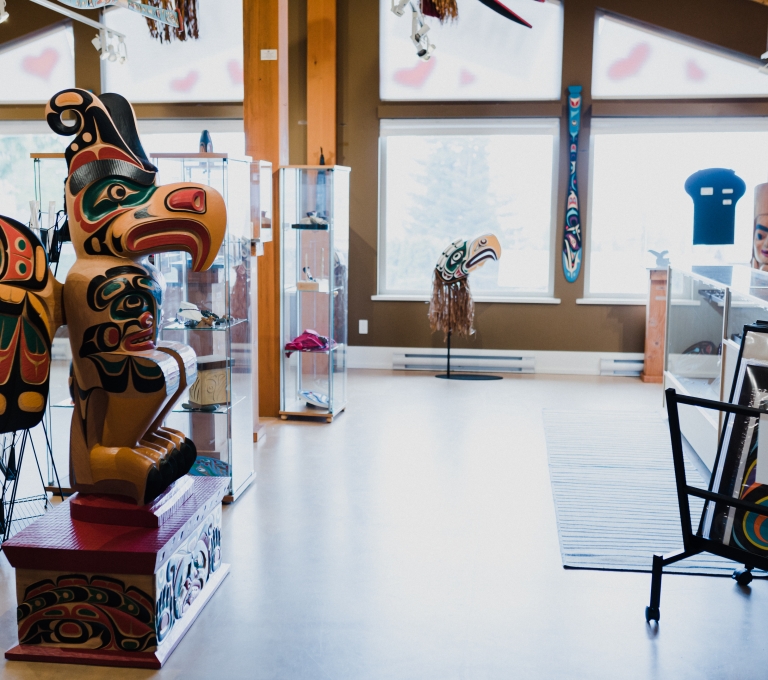
The history of settlement in the area is vividly captured at the Cumberland Museum and Archives, which houses a walk-in replica of a coal mine and thousands of storytelling artefacts.
Vanished Chinatown
Cumberland's Chinatown, for one. It was once the 5th largest in BC. This was no minor miners' settlement. It had 100 businesses, 1,000 bachelors and two 400-seat theatres for performances by Chinese singers and acrobats. It also had 14 fan tan houses and a mysterious number of opium dens. It was alive, the sort of place today's travellers fly thousands of miles to see.
It's a vast pity that almost nothing remains of Cumberland's Chinatown today. The area is a scenic marshland and a popular spot for hikers and bikers. Maybe the trick is to spend some time at the marsh, listening and imagining. Pssst: It helps to see the Museum video of historic Chinatown images before going.
Preservation Creek Heritage Site
At the Preservation Creek Heritage Site, is a Chinese coal miner's cabin. It speaks of hardship and monotony.
Chinese & Japanese Cemeteries
Drive on Cumberland Rd east of the village to the Japanese and Chinese cemeteries. The Japanese cemetery, surrounded by a white wooden fence, its tombstones clustered in a forest setting, is especially serene and lovely. A cairn calls attention to Japanese victims of mine explosions. The cemetery is both a Canadian Heritage Site and Japanese Legacy Grave.
Albert "Ginger" Goodwin
Perhaps the most poignant of Cumberland historic sites is the grave of labour and anti-war activist Albert "Ginger" Goodwin. Goodwin appears to have been a slight, frail, red-headed Englishman determined to better the coal miner's lot. He was actively involved with unions, and one of his principal objectives was an 8-hour working day. Such impertinence rendered him a major nuisance to mine owners and the authorities of the day.
Goodwin's Story
The story gets especially fascinating when Goodwin, afflicted with miner's black lung and bad teeth, was listed as temporarily unfit for military duty. After the strike, the conscription board was mysteriously persuaded to reverse its decision. Declared a draft dodger, Goodwin fled from the town of Trail to Cumberland on Vancouver Island, but was tracked down and shot to death by a Dominion Police constable who, mysteriously, never went to trial for the killing. As contemporary detectives might say, the fix was in.
Miner's Memorial Day
His death precipitated Canada's First General Strike in Aug, 1918. The annual Miners' Memorial Day in late June takes place at Ginger Goodwin's gravesite and commemorates the lives of near 300 miners who died on the job.
Read Less